Welcome
This a mini-site for the Interoperability and Data Exchange for Humanitarian Action (IDEHA) project, a place to:
- Understand more about the challenge the project is addressing and the project objectives
- Showcase key project outputs
- Provide a knowledge management repository for the project activities
- A point of reference for people and organizations interested in the interoperability of registration and beneficiary management systems.
About IDEHA
The challenge
Humanitarian responses involve multiple partners conducting separate registrations and assessments, leading to:
- Inclusion/exclusion errors and duplication of beneficiaries
- Delays in assistance delivery
- Survey fatigue among affected populations - Increased risk of post-delivery aid diversion
- Lengthy, redundant data-sharing agreements between organizations
The approach
IDEHA aims to build a collaborative ecosystem for coordinated registration, targeting, and aid delivery through secure, interoperable data-sharing systems across humanitarian partners.
Activities
- Partner Mapping – Map registration partners and data flows showing data collection fields and their overlaps.
- Single Registration Form (SRF) – Develop a draft standardized minimum dataset for interoperable registration
- Pilot Data Exchange – Conduct at least one interoperability pilot with a partner to deduplicate beneficiary lists
- BRaVe System Enhancement – Improve system agility and interoperability of the BRaVe system
Expected Outcomes
- Institutionalized multi-stakeholder registration and data-sharing framework
- Enhanced BRaVe system accessible to partners at varying digital maturity levels
- Improved registration, targeting, and data exchange processes in target counties
- Reduced duplication, faster response times, and minimized aid diversion risk
Learn More
Below are links to some of the main activities and outputs of the project so far, and a page for the ongoing work on the SRF.
Mapping Report
This research examined current registration and beneficiary management practices in South Sudan, to better understand registration data collection and management practices, the commonality of data fields, and the current extent of data sharing agreements among organizations.
Workshop Report
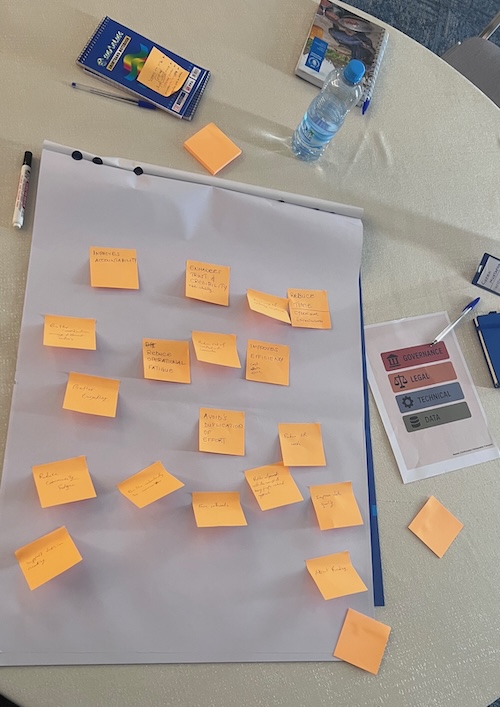
Held on 19th November, this workshop brought together national and international NGOs, UN agencies and cluster representatives, reviewing the research findings on registration practices, examining the main challenges, approaches and goals for interoperable registration data in South Sudan, charting a way forward on risk mitigation, standardization and governance
Ongoing work
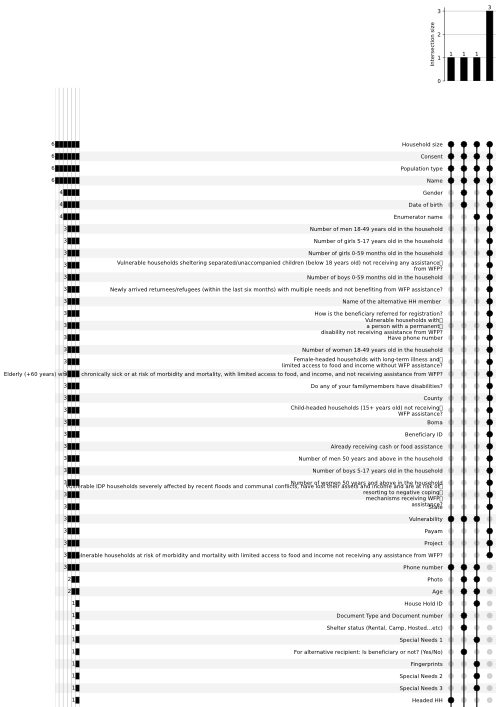
The ongoing work in South Sudan as part of the pilot and broader engagement as part of the IMWG in developing and testing of a Single Registration Form (SRF) and other elements of a framework for interoperable systems.
Get involved
If you are curious to learn more about about interoperability of registration systems or are South Sudan based and would like to learn more or contribute to the initiative there, please contact one of more of the following:
IOM Regional Office, Nairobi – Brian MC DONALD, bmcdonald@iom.int
IOM South Sudan - Daniel HILAIRE, dhilaire@iom.int; Benson MBOGANI bmbogani@iom.int
IOM HQ, Geneva – Amalraj NALLAINATHAN , anallainatha@iom.int